Blog · Kiniza
Three-level scorecards that leaders use
4 September 2026
Direction flows down. Evidence flows back. Keep risk, cost and adoption on one connected view.
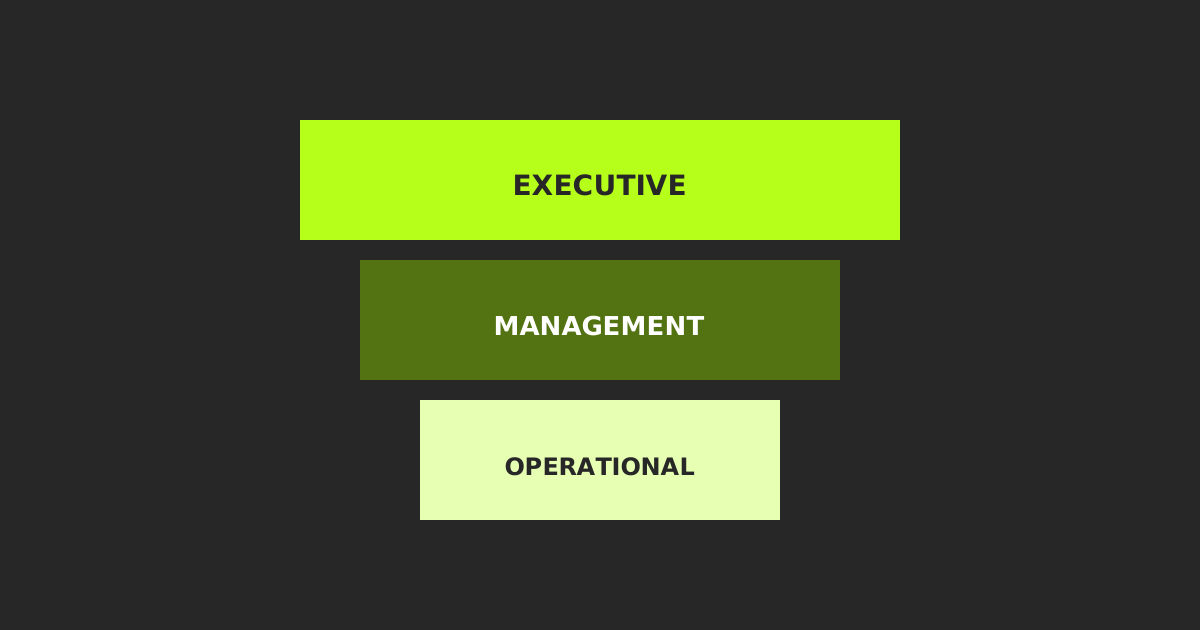
Scorecards fail when they try to show everything. Kiniza keeps executive views short: risk, cost and value, and adoption. Leaders set priorities and decide whether the next wave proceeds.
Management scorecards translate those decisions into area plans, resources, deadlines and success measures. This is where federated ownership becomes concrete.
Operational views track tasks, blockers and evidence of completion. They feed the next executive review. Without that feedback, direction is a broadcast.
A completed task is not automatically a resolved issue. That sentence prevents false comfort. Closure needs evidence that matches the risk or cost claim.
Visual design should serve scanning. Lime and charcoal hierarchy, clear owners, dates and status. Decoration that slows reading has no place in a board pack.
Automate what you can, validate what you must. Reporting timeliness is a service measure. Fragile scrapers that break monthly reviews destroy trust faster than manual exports.
Quarterly strategy reviews replace one executive meeting so the cadence stays sustainable. Use that time to retire work as well as to start it.
Person-driven questions keep the scorecard honest. Is the investment defensible. What changes in my area. What am I equipped to do. If the scorecard cannot support those answers, redesign it.
Establish stands the scorecard up in four weeks. Operate keeps it alive. Specialist days improve feeds and remediation when the backlog needs hands.
Start with one tenant, a few business areas and five evidence feeds. Expand when the loop closes reliably. Breadth without cadence is noise.
Practical next steps stay person-driven. Book a free briefing at hello@kiniza.co.uk if you want a working session on how direction, plans and tasks connect in your estate.